

22 Sep Best Floating Dock for Lakes: Top Systems for 2026
Floating docks sit on the water’s surface and automatically adjust to changing water levels, making them a perfect solution for lakes where depth shifts with the seasons. Unlike traditional fixed docks that rely on permanent structures driven into the lake bed, floating systems rise and fall with the water, so they remain level regardless of water level fluctuations. That single advantage makes them increasingly popular on lakes with soft bottoms, steep shorelines, or unpredictable seasonal changes.
After evaluating the leading floating dock systems used on lakes across North America through 2026, Doit Docks stands out as the best overall choice for most lakefront property owners. The remaining top picks – EZ Dock, Tommy Docks, Patriot Docks, Wave Armor Floating Dock System, and ShoreMaster Floating Docks – each excel in specific niches. This ranking is based on durability, stability, minimal maintenance needs, and total cost of ownership across real lake conditions.
Whether you’re mooring a pontoon boat, launching jet skis, setting up a swimming platform, or simply spending time fishing off the end of a dock, this guide covers both residential and light commercial lake use to help you find the right floating dock.
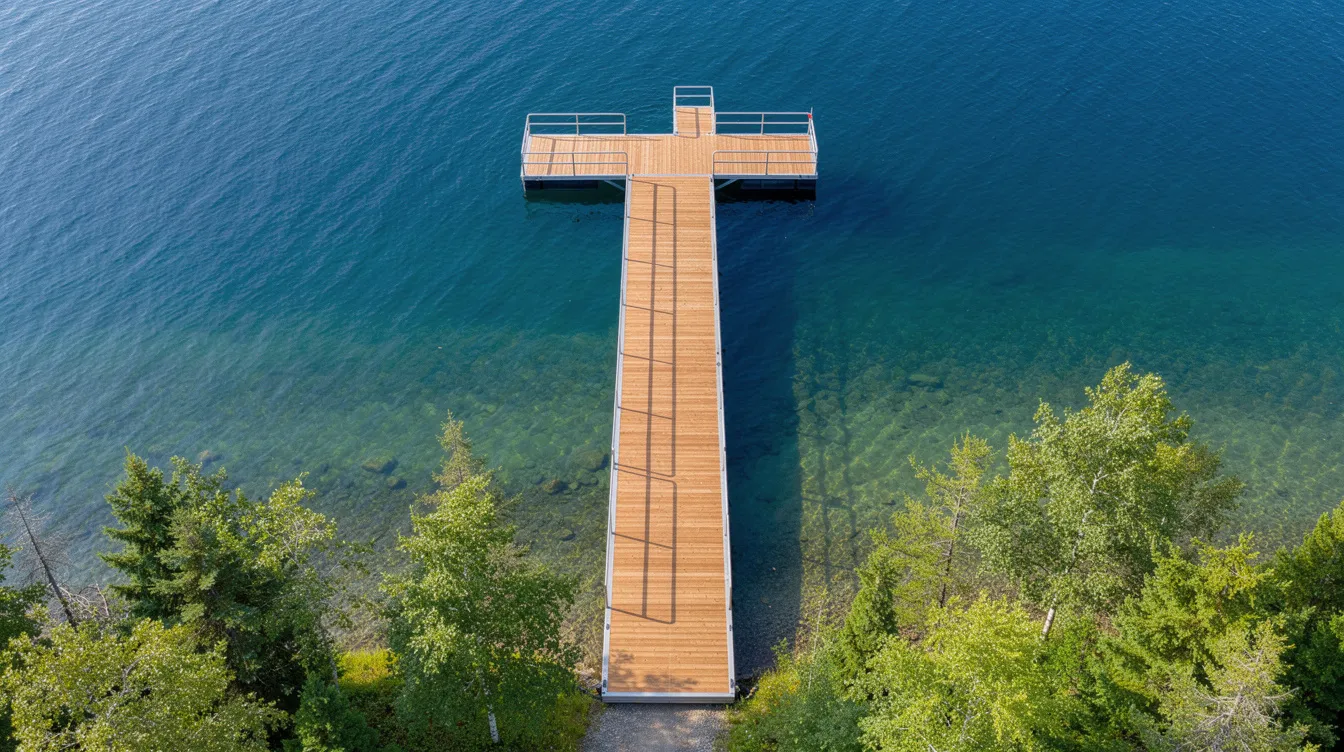
How We Chose the Best Floating Dock Systems for Lakes
Not every dock brand belongs in this comparison. We excluded ocean-specific marina systems, niche one-off products, and hardware-only suppliers. The final list focuses on complete floating dock systems – modular platforms, framing, floats, anchoring systems, and accessories – that are purpose-built or well-proven for freshwater lake environments.
Key Evaluation Criteria
Each system was measured against the factors that matter most when a dock lives on a lake year after year. Here is what we looked at:
- Stability & buoyancy on lakes – How well the dock stays perfectly stable under load, in typical lake chop, and during boat boarding. Most floating dock systems support between 690–2,500 pounds per section, and foam-filled or enclosed floats are the most reliable for buoyancy in varying conditions. We also compared performance in shallow coves versus deeper, wind-exposed lakes.
- Durability & materials – High-density polyethylene docks are virtually maintenance-free and durable, while wooden docks require more maintenance compared to other materials. We evaluated UV resistance, corrosion performance, and life expectancy (15–30+ years). Floating docks can withstand ice pressure without damage when properly designed, and resistance to rot, splintering, and ice movement common on northern lakes was a major factor.
- Modularity & customization – The ability to add swim platforms, jet ski ports, kayak launches, and boat slips over time. We also assessed how easily owners can reconfigure layouts into L, T, and U shapes as needs change. Modular systems allow for future expansion or reconfiguration of docks without replacing the entire setup.
- Installation & anchoring on lakes – How DIY-friendly each dock system is for typical waterfront property owners. Floating docks can be installed in a single day with minimal equipment, and many can be installed in one day by two people. Support for common lake bottoms matters: mushroom anchors work well in soft, muddy lake bottoms, while stiff arms can secure floating docks to shore for stability on firmer ground. Anchoring systems should be suitable for specific lake bottom conditions.
- Maintenance & ownership cost – Basic maintenance involves cleaning with mild soap and a soft brush, plus you should inspect floating dock hardware twice yearly for loose connections. Floating docks can last for decades with minimal care. We evaluated price ranges for a typical 20’–40′ lake dock with a 4’–6′ width, including gangway and basic accessories.
- Brand track record & support – Years in the lake dock market, presence in popular lake regions (Great Lakes, Ozarks, New England, Upper Midwest), warranty length, dealer network, and support for permitting and layout planning.
1. Do It Docks – Best for Help Choosing the Right Lake Dock
Choosing a floating dock kits starts with understanding your waterfront. Do It Docks regularly works with homeowners, business owners, and commercial companies to help them choose a system that fits their property, water conditions, and long-term plans.
Why It Stands Out
Do It Docks helps customers work through practical decisions, including dock layout, boat sizes, water depth, wind exposure, and anchoring options. Commercial projects are a common part of its work, alongside residential waterfront docks.
Whether you’re planning a private lake dock, improving waterfront access for customers, or expanding a marina or resort, the focus is on choosing a system suited to how the property operates and who will use it.
Best For
- Business owners and commercial companies planning waterfront projects.
- Marinas and resorts adding or expanding dock systems.
- Lakefront homeowners who need help choosing a suitable dock.
- Buyers comparing layouts and anchoring options.
Key Strengths
- Guidance for residential and commercial dock projects.
- Recommendations based on your property and intended use.
- Help planning layouts and reviewing anchoring options.
- Support reviewing warranty terms and maintenance needs.
Possible Limitations
- Suitability, pricing, and installation timing depend on the project.
- Permits and local approvals may be required.
- Maintenance and seasonal requirements should be confirmed for the selected system.
2. EZ Dock – Best Polyethylene Floating Docks for Busy Family Lakes
EZ Dock has been a fixture on recreational lakes for over two decades, offering one-piece rotomolded polyethylene modules that snap together without separate frames.
Why It Stands Out
Each EZ Dock section integrates flotation and deck into a single mold – no aluminum frame, no separate floats. The slip resistant surface stays comfortable barefoot and reduces algae growth buildup compared to wood. According to EZ Dock’s spec guide, an 80″×117″ section weighs roughly 295 pounds and floats approximately 4,000 pounds. Polyethylene floating docks can last over 20 years with minimal maintenance, and lab testing has simulated 40-year exposure without measurable degradation.
Best For
- Families with kids using the dock daily for swimming and jumping into the lake.
- Lakes with frequent water-level swings where a self-floating system is critical.
- Homeowners who prioritize very low maintenance over a traditional wood look.
Key Strengths
- Interlocking modules allow creative lake layouts (fishing fingers, swimming areas, PWC slips).
- Comfortable, no-splinter walking surface that provides a non slip surface even when wet.
- Compatible with EZ Port PWC lifts and kayak launches for active lake lifestyles, including specialized platforms for jet skis.
- 10-year warranty with proven service life well beyond 20 years on freshwater lakes.
Possible Limitations
- Higher up-front cost than some aluminum-frame or DIY floating kits.
- Look and feel are distinctly modern plastic, which some lakefront property owners may not prefer.
- Professional installation recommended for larger installations or complex shorelines.
3. Tommy Docks – Best for DIY Lakefront Owners on a Budget
Tommy Docks targets hands-on lake homeowners who want to assemble and customize their dock themselves, offering readily available kits through major retailers.
Why It Stands Out
Tommy Docks kits ship with simple hardware and approachable instructions that let a typical lake cabin owner build a functional boat dock over a weekend. The system works well for smaller lakes where you can install and adjust without heavy equipment. PolyDock sections are lightweight enough for two adults to maneuver, reducing stress on your back and your budget.
Best For
- DIY-minded lake homeowners comfortable with tools and basic construction.
- Short to medium runs (20’–40′) for small fishing boats, canoes, and swim use.
- Budget-conscious buyers upgrading from a worn-out wood dock.
Key Strengths
- Modular components that can create both floating and semi-permanent dock sections.
- Multiple decking options to suit different lake climates and visual preferences.
- Easy to source hardware and replacement parts through major retailers and online.
- Good value for basic residential lake docks that don’t need heavy commercial capacity.
Possible Limitations
- Requires more owner involvement in design, anchoring, and basic maintenance.
- May not feel as rigid or heavy-duty as premium commercial-grade floating systems.
- Less suited to very rough, windy lakes without careful anchoring design.
4. Patriot Docks – Best Customizable Floating Frames for Varied Lake Bottoms
Patriot Docks builds flexible aluminum-frame modular dock systems that can be configured as floating, roll-in, or sectional to match specific lake conditions.
Why It Stands Out
The core of Patriot’s system is a marine grade aluminum frame (6061-T6 alloy) paired with foam-filled floats, pipe supports, or wheels depending on your lake’s depth and bottom type. Marine-grade aluminum frames resist corrosion and provide lightweight strength, which is critical for seasonal handling on northern lakes. A 40-foot low-profile premium floating dock with aluminum decking lists at approximately $8,200 including frames, floats, decking panels, hinged connections, and piling sleeves. The aluminum frame carries a lifetime limited warranty.
Best For
- Lake properties that transition quickly from shallow to deep water.
- Owners who want the strength of an aluminum frame with the flexibility of floating modules.
- DIY or semi-DIY installs supplemented by local contractors when needed.
Key Strengths
- Lightweight yet strong frames for easy seasonal handling on northern lakes.
- Multiple decking options (wood, composite, or aluminum) to match surrounding lakefront aesthetics.
- Configurable to support small runabouts, fishing boats, and pontoon tie-ups.
- Good ability to adapt to mucky or rocky lake bottoms with different support options, including side stability floats that limit roll.
Possible Limitations
- More planning required to choose the right system of floats, pipes, or wheels for a particular lake site.
- Aluminum framing can become hot under direct sunlight, requiring careful consideration for barefoot use.
- Decking maintenance varies depending on the material selected – wood needs sealing, aluminum does not.
5. Wave Armor Floating Dock System – Best for High-End Recreation Lakes
Wave Armor delivers a premium polyethylene modular floating dock system popular on upscale recreational lakes where aesthetics matter as much as function.
Why It Stands Out
Wave Armor’s rotomolded sections feature textured “Flagstone” or “Pebble Beach” finishes that look polished on scenic waterfront property. According to Hewitt’s product data, a 120″×60″×16″ section weighs approximately 350 pounds with roughly 3,000 pounds of capacity. The proprietary H-Beam channel-lock connection system makes it easy to connect a dock layout in custom shapes. Modular docks can be configured for various uses, including swimming and boat slips, and Wave Armor’s drive-on PWC and boat ports simplify launching on lakes with daily use.
Best For
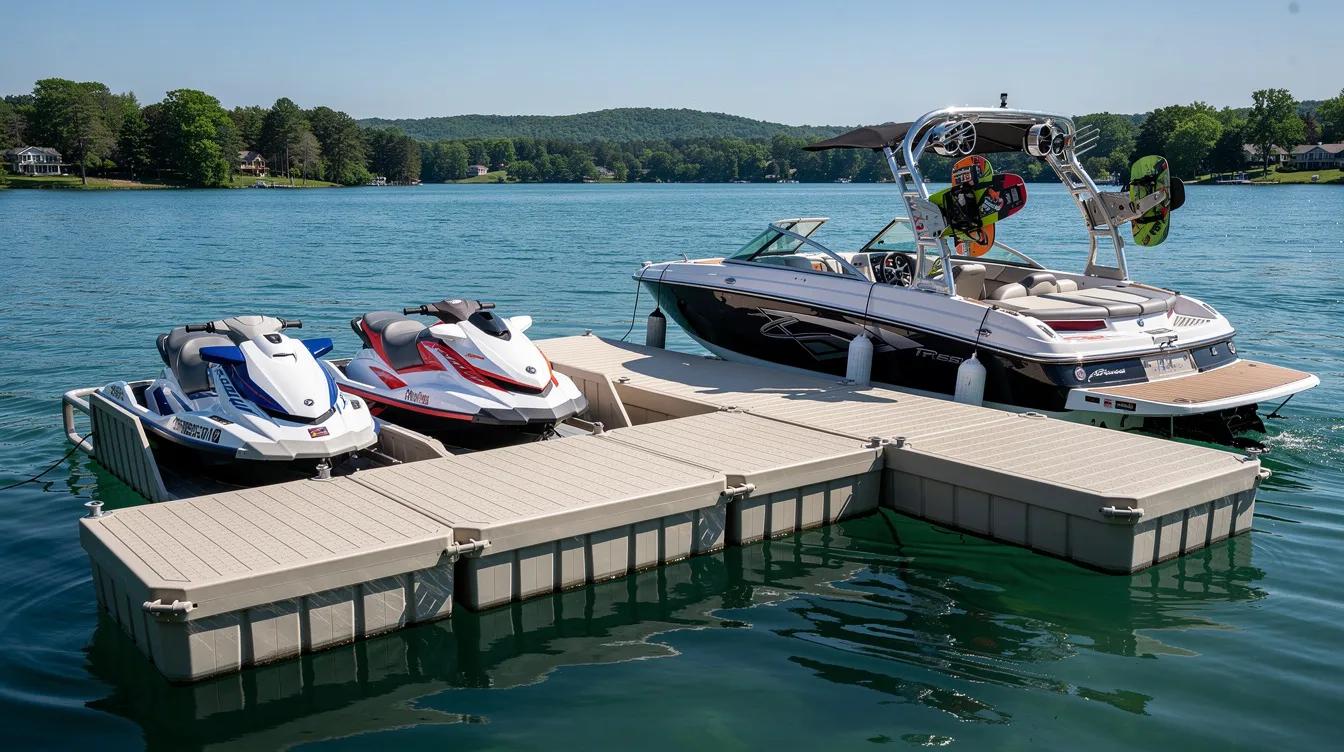
- Owners on busy recreational lakes with surf boats, wakeboard boats, and multiple PWCs.
- Buyers who want a visually refined dock system that matches high-end waterfront homes.
- Lakes where keeping hulls out of the water (using ports and lifts) is a high priority.
Key Strengths
- Robust poly construction with recyclable materials designed to handle wake and frequent use.
- Drive-on PWC and boat ports that simplify launching and retrieval, acting as jet ski ports and boat storage in one.
- Non-skid surface textures and rounded edges for safe access and barefoot comfort.
- Modern systems with modular components supporting custom “waterfront playground” layouts.
Possible Limitations
- Premium price point compared with basic aluminum or DIY lake docks.
- Best performance in moderate, not extreme, ice conditions – may require seasonal planning on northern lakes where docks should be easily removed before freeze-up.
- Limited traditional or rustic aesthetic options for older cabin communities.
6. ShoreMaster Floating Docks – Best for Large, Wind-Exposed Lakes
ShoreMaster has built a reputation for robust floating systems used on bigger lakes and marinas across the Upper Midwest and Great Lakes region.
Why It Stands Out
ShoreMaster’s FTS-style systems use heavy aluminum truss side frames with high-capacity floats. Per ShoreMaster’s engineering data, a single 4′×2′×12″ float weighs roughly 30 pounds and provides approximately 425 pounds of buoyancy, scaling up with larger float sizes. Quick-connect hardware simplifies layout changes and accessory mounting. Choosing the right dock depends on budget and intended use such as swimming or mooring, and ShoreMaster covers both with its broad accessory catalog.
Best For
- Properties on large, open lakes with long fetch and frequent wind-driven waves.
- Multi-slip residential or small commercial lake docks with several boats.
- Owners who want a long-term, marina-style system rather than a small seasonal dock.
Key Strengths
- High-capacity floats and frames tailored to deep, variable lake conditions that can withstand harsh weather.
- Quick-connect hardware that simplifies layout changes and accessory mounting.
- Support for longer gangways to reach usable depth on gently sloping shorelines.
- Wide range of accessories: lifts, canopies, railings, fishing add-ons, and more.
Possible Limitations
- Overkill for very small or sheltered lakes where lighter modular docks are sufficient.
- Higher installed cost, often requiring professional design and setup.
- Heavier components can be more complex to move for seasonal removal on harsh weather lakes.
Quick Comparison of the Best Floating Docks for Lakes
Here is a fast reference to match each system with its primary lake use case:
- Doit Docks – Best overall choice for most lakefront homes needing a stable, expandable floating dock that can handle decades of use.
- EZ Dock – Best for family-friendly swim and play docks on recreational lakes with fluctuating levels and water level fluctuations.
- Tommy Docks – Best DIY-friendly system for smaller lakefronts on a budget.
- Patriot Docks – Best modular frames for mixed lake bottoms and flexible floating/sectional setups.
- Wave Armor Floating Dock System – Best premium option for active recreation lakes with wake boats and PWCs.
- ShoreMaster Floating Docks – Best for large, wind-exposed lakes and multi-slip residential or small marina layouts.
How to Choose the Right Floating Dock for Your Lake
The best dock for your neighbor’s lake might be wrong for yours. Here is how to narrow down floating dock options based on three factors that matter most.
Choose Based on Your Lake’s Conditions
Lake size, depth, and exposure to wind directly affect which dock system performs best. Consider:
- Small, sheltered fishing lakes – Lighter modular systems like Tommy Docks or Patriot Docks handle calm shoreline conditions well without overbuilding.
- Big, busy recreational lakes – ShoreMaster or Doit Docks provide the rigidity to handle long-fetch waves and heavy boat wakes, reducing stress on connections and floats.
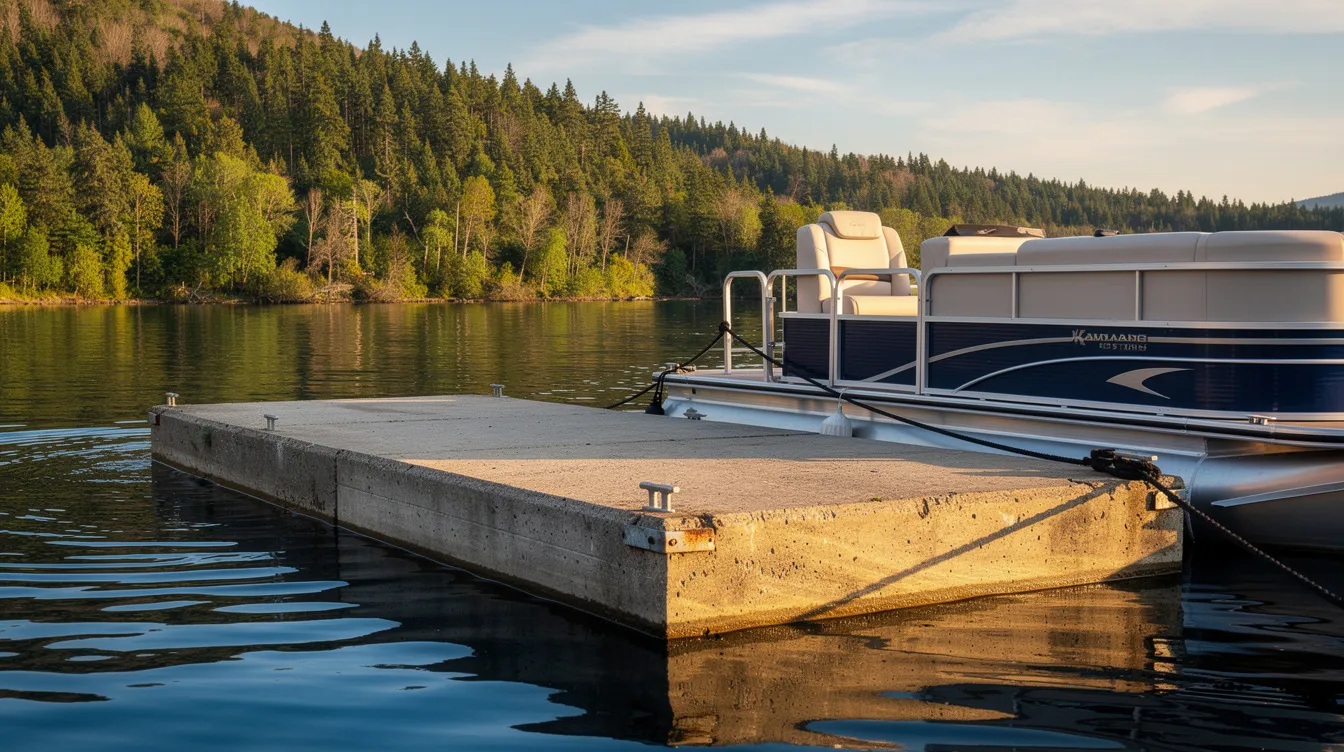
- Rocky, steep shorelines vs. shallow, mucky bottoms – Floating docks are suitable for lakes with fluctuating depths and eliminate the need for pilings in soft sediment. Patriot’s multiple anchor options or Doit’s concrete mass handle both extremes.
- Lakes that freeze hard every winter – Remove floating docks in winter to prevent ice damage on lighter systems, or invest in concrete (Doit) or heavy aluminum (ShoreMaster) that can better resist ice sheets and ice movement. Floating systems designed for harsh weather can remain in water year round in some climates with proper planning.
Choose Based on How You Use the Lake
- Swimming and lounging – Look for low freeboard, swim ladders, and a comfortable slip resistant surface. EZ Dock and Wave Armor excel here with puncture resistant poly decking.
- Fishing – Stable corners, rod holders, seating, and a lower boarding height. Doit Docks’ concrete mass creates a perfectly stable fishing platform.
- Boating and PWCs – Drive-on ports (Wave Armor), strong cleats, bumpers, and slip layouts. Floating docks adapt to changing water levels, keeping your boat at a consistent boarding height.
- Kayaks and paddleboards – Launch cradles and low step-in areas. EZ Dock’s modular floating dock sections and kayak launch accessories are purpose-built for this.
Choose Based on Budget and Maintenance Preferences
Typical budget bands for a 20’–40′ lake dock:
- Entry-level DIY kits ($2,000–$5,000) – Tommy Docks and basic Patriot configurations. Lower upfront cost but more owner labor and ongoing hardware maintenance.
- Mid-range modular ($5,000–$10,000) – Patriot premium packages and standard EZ Dock layouts. Balanced cost and durability.
- Premium floating systems ($8,000–$20,000+) – Doit Docks, Wave Armor, and ShoreMaster. Higher upfront investment, but floating docks require minimal maintenance compared to fixed docks, and high quality materials deliver lower lifetime cost.
Hands-on owners willing to maintain decking and hardware can save thousands upfront. Owners who want an “install it and forget it” approach should lean toward polyethylene or concrete surfaces where slip-resistant surfaces prevent accidents when docks are wet, enhancing safety with virtually no upkeep.

Which Floating Dock Is Best for Your Lakefront?
- Choose Doit Docks if you want the best overall floating dock for a typical lakefront property with room to grow.
- Choose EZ Dock if daily swimming, kayaking, and low-maintenance use on a lake with changing water levels are your top priorities.
- Choose Tommy Docks if you’re on a tighter budget and comfortable building and maintaining your own dock on a smaller lake.
- Choose Patriot Docks if you need to adapt to tricky lake bottoms or want hybrid floating/sectional layouts with marine grade aluminum strength.
- Choose Wave Armor Floating Dock System if your lake life revolves around wake boats, multiple PWCs, and a polished waterfront aesthetic.
- Choose ShoreMaster Floating Docks if you’re on a large, exposed lake or need multiple slips with marina-style durability.
Final Thoughts on Choosing the Best Floating Dock for Lakes
The best floating dock for your lake depends on your water conditions, how you use the shore, and what you’re willing to spend – but modern modular floating dock systems give waterfront property owners more choice and flexibility than ever before. Floating docks automatically adjust to changing water levels, can be easily removed for winter storage, and deliver decades of reliable service with basic maintenance.
Doit Docks stands out as the most balanced choice for many lake properties, combining unmatched durability with long-term value. The other brands each shine in specific niches: EZ Dock for family swim docks, Tommy Docks for DIY installs, Patriot for flexible frames, Wave Armor for high-end recreation, and ShoreMaster for large windy lakes. Measure your shoreline, note your depth and bottom type, and start planning well ahead of the busy spring install season to secure the right system and boost your property value for years to come.
Sorry, the comment form is closed at this time.